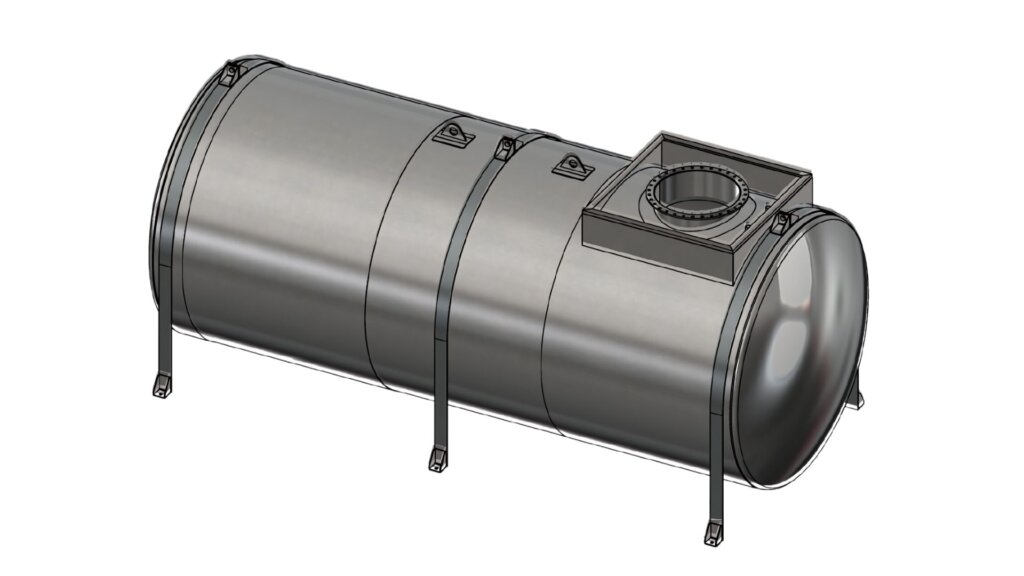
Why have pumped head tanks
Fuel storage tanks have pumped heads (often called ellipsoid, torospheric or hemispheric caps) for a number of reasons related to structural integrity, safety and efficiency. Here are the main advantages of this form:
Uniform pressure distribution:
- The pumped heads distribute the internal pressure exercised by the stored fuel more uniform than the flat heads. This reduces voltage concentration and minimises the risk of fissures or structural collapse.
Increased structural resistance:
- The pumped shape provides superior mechanical resistance, allowing the tanks to better withstand high internal pressures. This is essential for large tanks or those storing fuel under pressure.
Material efficiency:
- The pumped heads require less material to achieve the same structural resistance as the flat heads. This makes the tanks more economical in terms of material consumption and weight.
Increased safety:
- The pumped shape contributes to the safety of the tank, ensuring a more robust and more resistant structure to variable pressures. In the case of excessive pressure, the pumped heads are less susceptible to deformation or collapse, reducing the risk of accidents.
Reduction of undoing effects:
- Bombed heads help reduce the flow effects or "values" of liquid inside the tank, which may arise due to external movements or pressure variations. This contributes to the stability of the tank and to the maintenance of structural integrity.
Improving fluid flow:
- The pumped form facilitates fluid flow inside the tank, reducing stagnation points and sediment accumulation. This is important to ensure a constant quality of stored fuel and to facilitate cleaning and maintenance operations.
Aesthetics and design:
- From an aesthetic point of view, pumped heads give a more modern and professional look to the tanks. This design is often preferred in industries where the visual aspect counts, besides functionality.
In conclusion, the pumped heads of fuel storage tanks offer many advantages, ranging from increased structural strength and uniform pressure distribution, to material safety and efficiency, making them a preferred choice in designing these equipment.